PRESS RELEASE
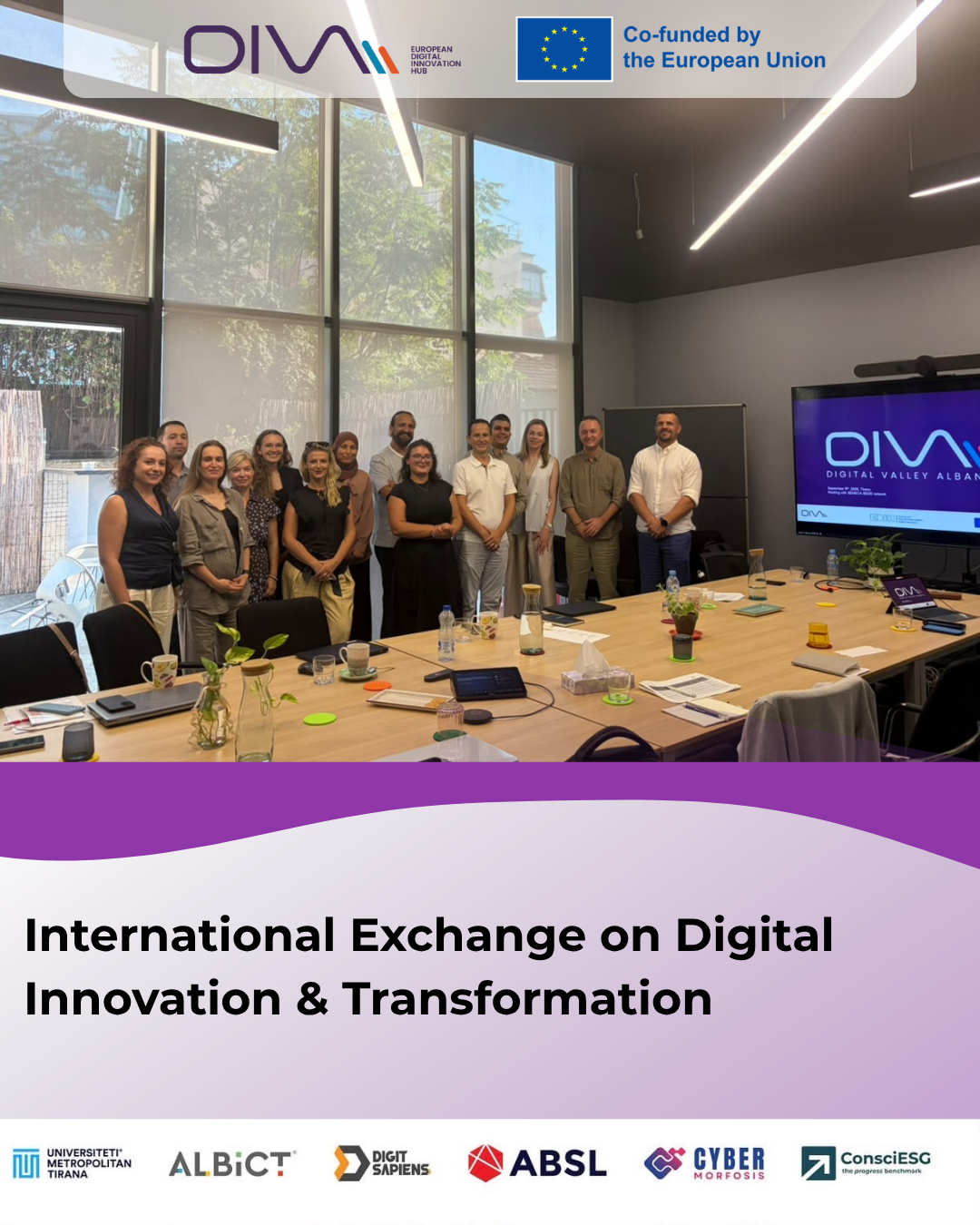
DiVA EDIH Hosts International GIZ Study Delegation for Exchange on Digital Innovation and Transformation
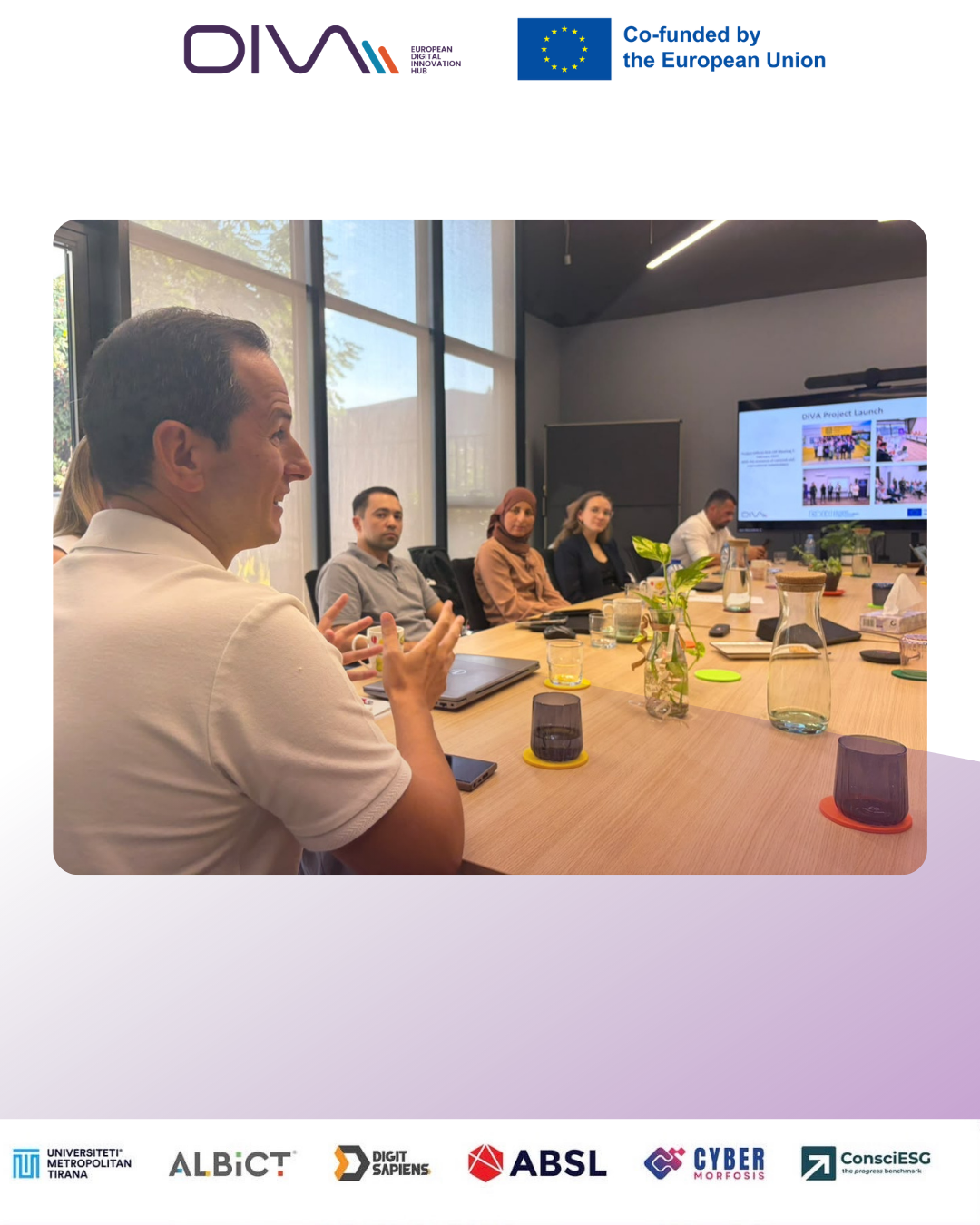
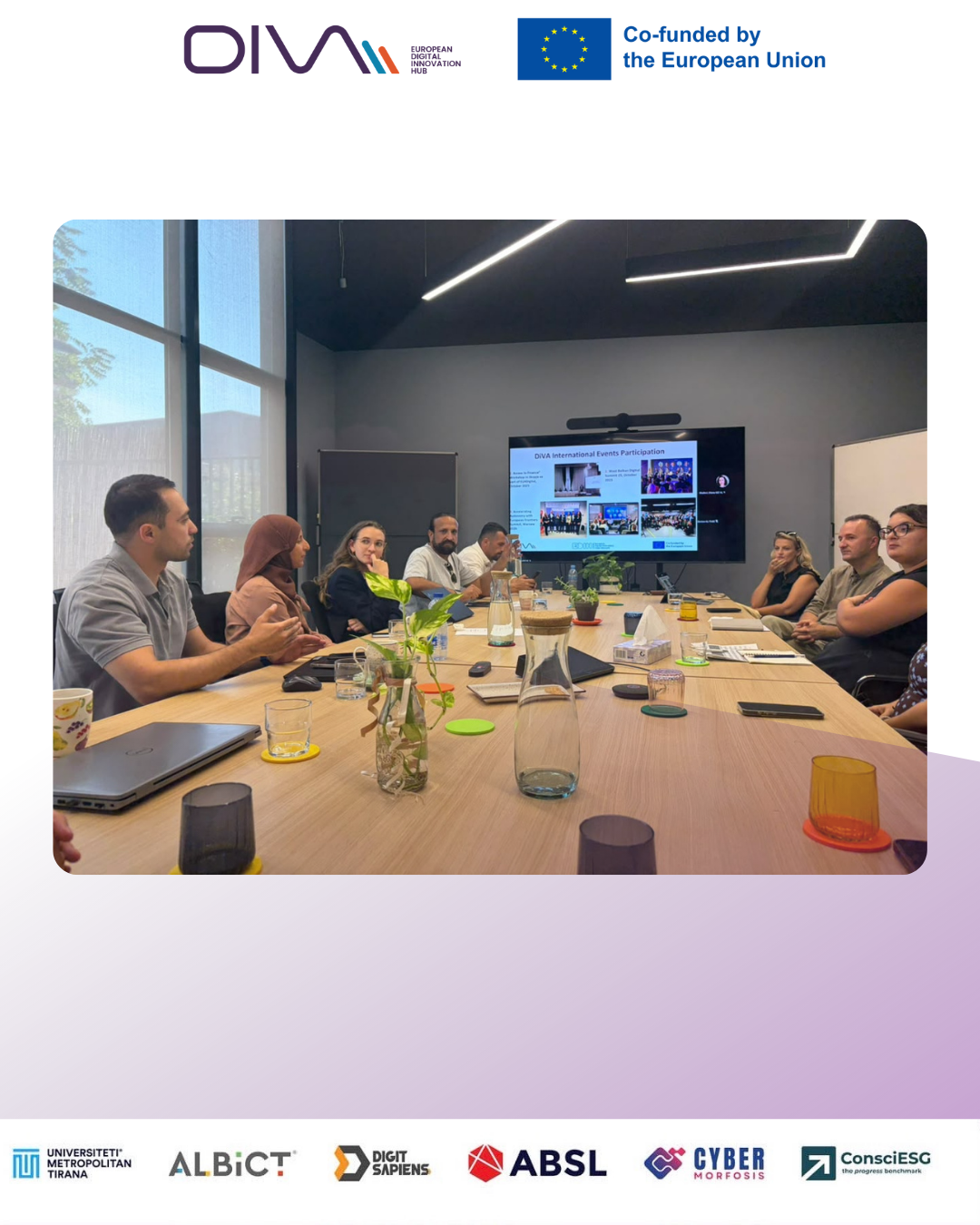
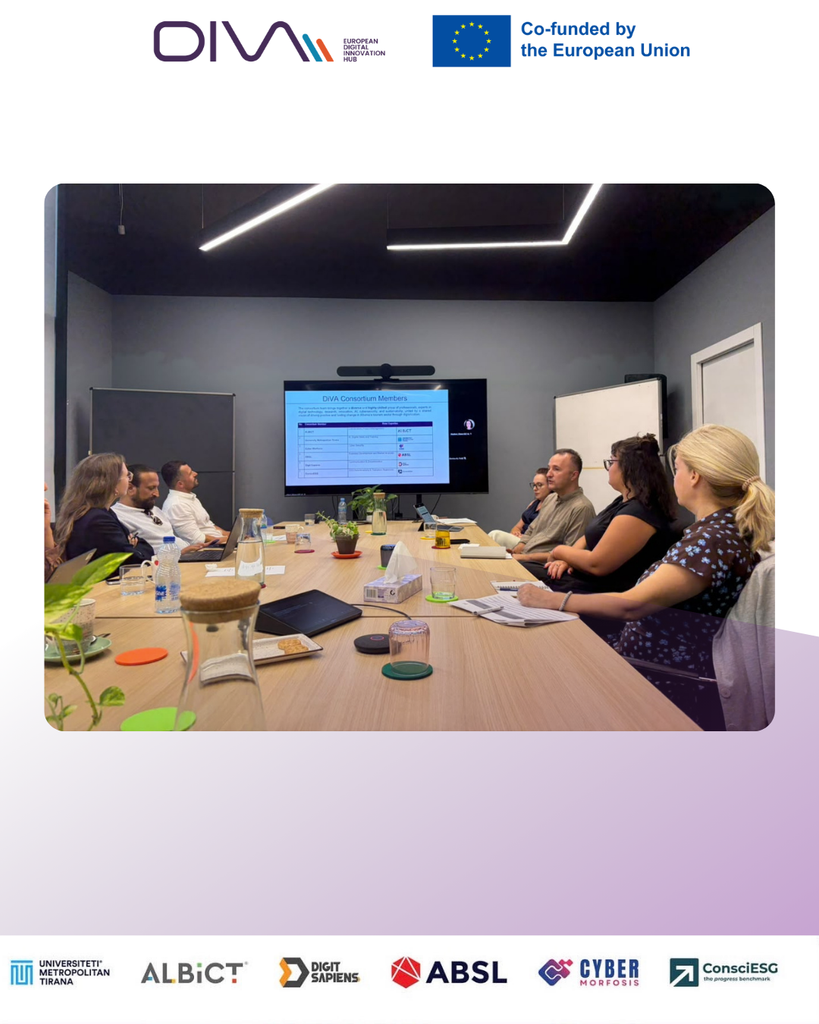
Tirana, Albania — DiVA European Digital Innovation Hub (DiVA EDIH) welcomed an international delegation from the GIZ Sector Network for Sustainable Economic Development and Employment (SENECA SEDE) for an in-person exchange with the full representation of the DiVA EDIH consortium in Albania.
The meeting provided an opportunity to present DiVA EDIH as a collaborative platform supporting the digital transformation of businesses and public-sector organisations, while showcasing the collective expertise and institutional capacity brought together through its consortium model.
Representatives of the DiVA EDIH consortium introduced the Hub’s role within Albania’s digital innovation ecosystem and discussed how coordinated support, technical expertise, skills development and ecosystem collaboration can help organisations adopt and apply advanced digital technologies more effectively.
The exchange placed particular emphasis on the value of European Digital Innovation Hubs as instruments for connecting enterprises, public institutions, technology providers, research and innovation actors, and other stakeholders around practical digitalisation needs.
Strengthening International Exchange on Digital Innovation
The visiting group is part of SENECA SEDE, GIZ’s internal Sector Network for Sustainable Economic Development and Employment, which promotes regional and technical knowledge exchange among GIZ professionals and projects.
The study visit is organised by the network’s Digitalization Working Group and is designed to provide participants with first-hand exposure to innovative digital ecosystems and initiatives in Albania and Kosovo, while facilitating direct exchange with institutions, projects and innovation actors.
The delegation consists of 10 participants representing Albania, Kosovo, Serbia, Uzbekistan, Tunisia and Germany, reflecting the cross-regional character of the SENECA SEDE network.
The meeting with DiVA EDIH served as a platform for international peer exchange, allowing participants to explore Albania’s approach to building digital innovation capacity and to discuss models that may be relevant to wider regional cooperation.
A Consortium-Based Approach to Digital Transformation
A central focus of the meeting was the DiVA EDIH consortium model, which brings together complementary organisations and competencies around a shared objective: supporting the uptake of digital technologies and strengthening the competitiveness, resilience and innovation capacity of organisations operating in Albania.
The participation of the full consortium representation enabled the study group to gain a comprehensive view of how different institutional roles, technical capabilities and areas of expertise can be integrated within a single digital innovation hub.
Discussions highlighted the importance of coordinated ecosystem action, particularly where digital transformation requires a combination of technology assessment, specialist expertise, capacity building, access to innovation networks and support for the practical adoption of new solutions.
The exchange also underlined the role that collaborative structures such as DiVA EDIH can play in reducing fragmentation within the innovation ecosystem and in creating stronger links between technology providers, enterprises, public institutions and knowledge organisations.
Shared Priorities for Digital Innovation
The thematic priorities of the SENECA SEDE delegation closely intersect with the broader areas addressed by digital innovation ecosystems.
Participants expressed particular interest in:
Artificial intelligence and digital solutions, including applications of AI in the labour market;
Green technologies;
Cybersecurity and regional cybersecurity cooperation;
Digital skills development;
Telecommunications regulation;
Digital government and digital transformation, including interoperability, enterprise architecture and digital public-service delivery;
Technology transfer; and
Regional cooperation.
These topics provided the basis for a broader discussion on how innovation hubs can help bridge the gap between emerging technologies and their practical application across business and public-sector environments.
The meeting also offered an opportunity to exchange perspectives on the conditions required for successful technology adoption, including access to expertise, institutional readiness, digital skills, cooperation between ecosystem actors and mechanisms for transferring innovation into real operational environments.
Connecting Albania’s Digital Ecosystem with Wider European and Regional Networks
For DiVA EDIH, the visit represented an opportunity to reinforce its role as a gateway between Albania’s digital innovation ecosystem and wider European and international networks.
Engagement with initiatives such as SENECA SEDE contributes to the exchange of practical experience, promotes the visibility of Albania’s digital innovation capabilities and creates opportunities for stronger cross-border cooperation between institutions facing similar digital transformation challenges.
The meeting also demonstrated the wider value of EDIH-type structures as convening platforms capable of connecting local expertise with European and international knowledge networks.
By bringing together the full DiVA EDIH consortium and an international delegation representing several countries and professional contexts, the exchange created space for identifying common challenges, sharing approaches and exploring opportunities for continued cooperation.
The visit concluded with a shared interest in maintaining dialogue and strengthening connections between DiVA EDIH, GIZ initiatives and other digital innovation actors across the wider region.
Through exchanges of this kind, DiVA EDIH continues to strengthen its position within Albania’s innovation landscape while contributing to the broader European objective of accelerating inclusive, practical and sustainable digital transformation through cooperation, knowledge exchange and ecosystem development.